Life can bring unexpected changes, disappointments and challenging situations. Whether it is a change in work, family circumstances, personal responsibilities or future plans, difficult experiences can affect how we think and feel.
Developing emotional resilience can help you adapt to these situations and continue moving forward without allowing one difficult experience to define your entire life.
What Is Emotional Resilience?
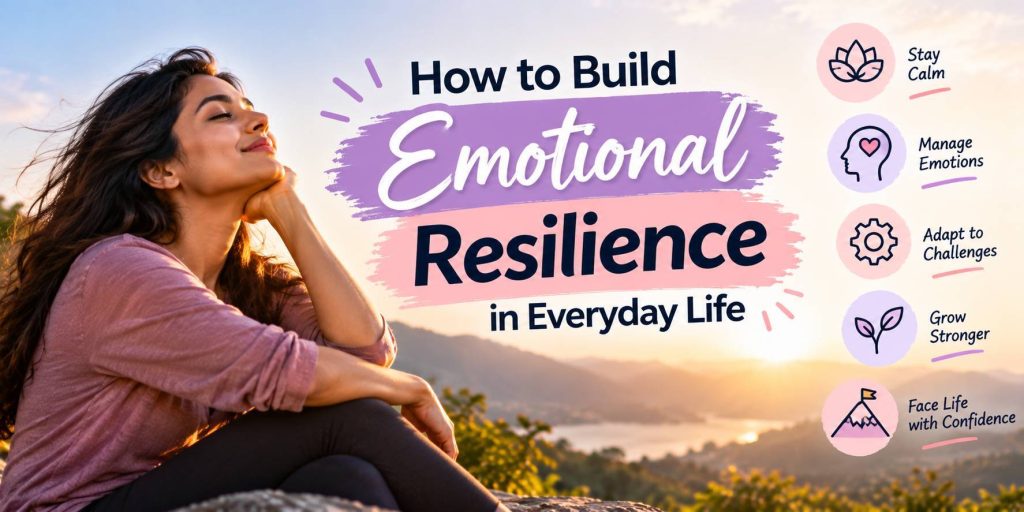
Emotional resilience is the ability to adapt when faced with challenges, uncertainty or change. It does not mean avoiding difficult emotions or pretending that everything is fine.
Instead, resilience involves recognising what you are experiencing, understanding your options and finding healthier ways to respond.
Everyone responds to challenges differently. What feels manageable for one person may feel overwhelming to another. Building resilience is therefore a personal process rather than something that happens in exactly the same way for everyone.
Allow Yourself to Experience Emotions
Difficult emotions are a normal part of life. Trying to constantly ignore frustration, disappointment or sadness can make it harder to understand what you actually need.
When something feels difficult, take a moment to identify the emotion rather than immediately reacting to it.
Ask yourself:
- What am I feeling?
- What may have caused this reaction?
- Is there something I can change?
- What do I need right now?
This simple reflection can help create space between an emotional response and your next decision.
Focus on What You Can Control
Not every situation can be changed. Other people’s decisions, unexpected events and things that have already happened may be outside your control.
Instead of spending all your energy on what cannot be changed, consider what you can influence.
You may be able to change how you communicate, what action you take next or who you ask for support. Focusing on these areas can make challenging circumstances feel more manageable.
Maintain Healthy Routines
When life feels uncertain, maintaining some structure can provide stability.
Regular sleep, nutritious meals, physical activity, hobbies and time away from constant digital distractions can support your emotional wellbeing.
You do not need to completely change your lifestyle. Small, consistent habits can create a stronger foundation for managing everyday challenges.
Learn From Difficult Experiences
A challenging experience can sometimes teach you something about yourself.
After a difficult situation, consider what you learned. You may have discovered that you are more adaptable than you expected, identified a personal boundary or realised that you need additional support.
This does not mean every difficult experience needs to have a positive outcome. Reflection simply allows you to understand your experience and use that understanding in the future.
Stay Connected With Others
Resilience does not mean dealing with everything alone.
Trusted friends, family members or other supportive people can provide encouragement, perspective or simply a safe space to talk.
Maintaining meaningful connections can be particularly valuable during periods of change or uncertainty.
When Professional Support May Help
Sometimes emotional difficulties continue and begin affecting everyday activities, relationships, work or studies.
In these circumstances, professional support may be worth considering. Counselling in Coimbatore can provide a confidential space to discuss personal concerns and explore suitable ways of managing them.
A psychologist in Coimbatore can also help you understand recurring emotional patterns and develop strategies based on your individual circumstances.
Building Resilience Takes Time
Emotional resilience is not about becoming unaffected by difficult situations. It is about learning how to respond to them with greater awareness and flexibility.
By recognising your emotions, focusing on what you can control, maintaining healthy routines and staying connected with supportive people, you can gradually strengthen your ability to manage life’s challenges.
Taking care of your mental wellbeing is an ongoing process, and seeking appropriate emotional support when needed can be an important part of that process.