
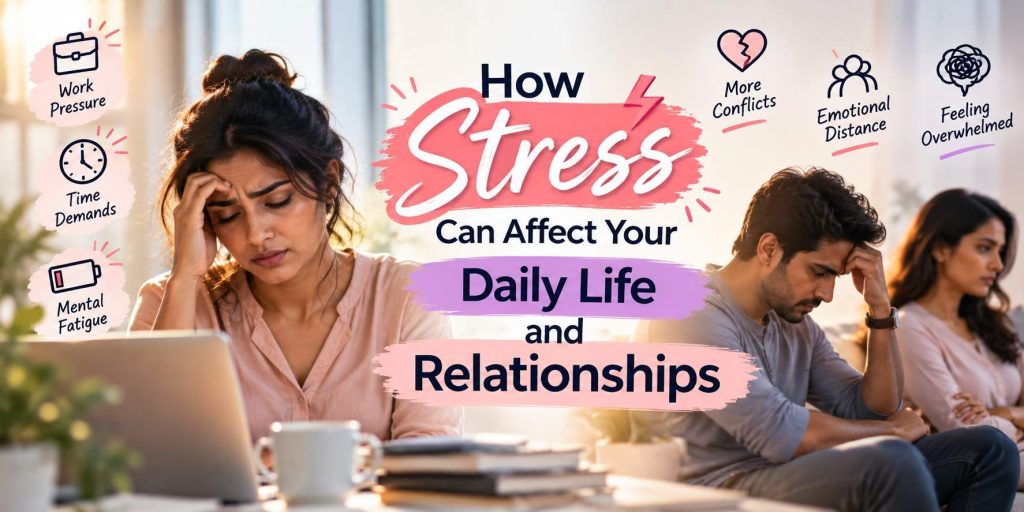
Stress is a natural response to demanding situations. Work pressure, financial responsibilities, family commitments, studies and major life changes can all contribute to everyday stress.
While occasional stress is common, ongoing pressure can gradually affect your mood, behaviour, communication and relationships. Recognising these changes early can help you understand when your stress levels may need more attention.
What Does Stress Look Like?
Stress does not always appear as obvious worry. It can show itself in different ways depending on the person.
You may notice that you are becoming more impatient, finding it difficult to concentrate or losing interest in activities you normally enjoy. Some people may also become quieter, avoid conversations or feel easily frustrated by small problems.
These changes can sometimes be overlooked because they develop gradually.
Stress and Everyday Life
When responsibilities continue to build, ordinary tasks can begin to feel more demanding.
You might struggle to stay focused at work, have difficulty organising your day or feel that you have very little time for yourself. Constant pressure may also affect sleep and leave you feeling mentally tired.
Identifying these changes can help you understand whether your current routine is placing too much pressure on you.
How Stress Can Affect Relationships
Stress does not only affect the individual experiencing it. It can also influence relationships.
When someone feels overwhelmed, they may have less patience during conversations or find it harder to listen. Small disagreements can become more difficult when both people are already dealing with other pressures.
Over time, this may lead to misunderstandings, reduced communication or spending less quality time together.
Understanding that stress can influence communication does not mean every relationship difficulty is caused by stress. It simply highlights why recognising external pressures can be useful when addressing relationship concerns.
Recognising Your Stress Triggers
A useful first step is identifying what is creating pressure.
Consider the situations that regularly leave you feeling overwhelmed. It could be workload, financial concerns, family responsibilities, social expectations or uncertainty about the future.
Writing these concerns down can make them easier to understand. You may also discover that several smaller pressures are adding up rather than one single issue causing the difficulty.
Make Time for Yourself
Personal time can easily disappear when responsibilities become demanding.
Making space for enjoyable activities, physical movement, hobbies, social connections or quiet time can provide a break from daily demands.
The goal is not to remove every responsibility. Instead, creating some balance can help prevent everyday pressure from taking over your entire routine.
When Should You Seek Support?
If stress continues for an extended period and starts affecting your relationships, work, studies, sleep or everyday activities, professional support may be helpful.
Counselling in Coimbatore can provide a confidential environment where you can discuss concerns and explore what may be contributing to ongoing stress.
A psychologist in Coimbatore can also help you understand patterns in your thoughts, emotions and behaviour and identify suitable ways to address them.
Looking After Your Mental Wellbeing
Stress is part of life, but constantly feeling overwhelmed should not simply be ignored.
Paying attention to changes in your behaviour, identifying sources of pressure and maintaining healthy routines can help you become more aware of your mental wellbeing.
If stress is beginning to affect your everyday life or relationships, seeking appropriate stress management support can be a positive step towards understanding your concerns and finding a way forward.